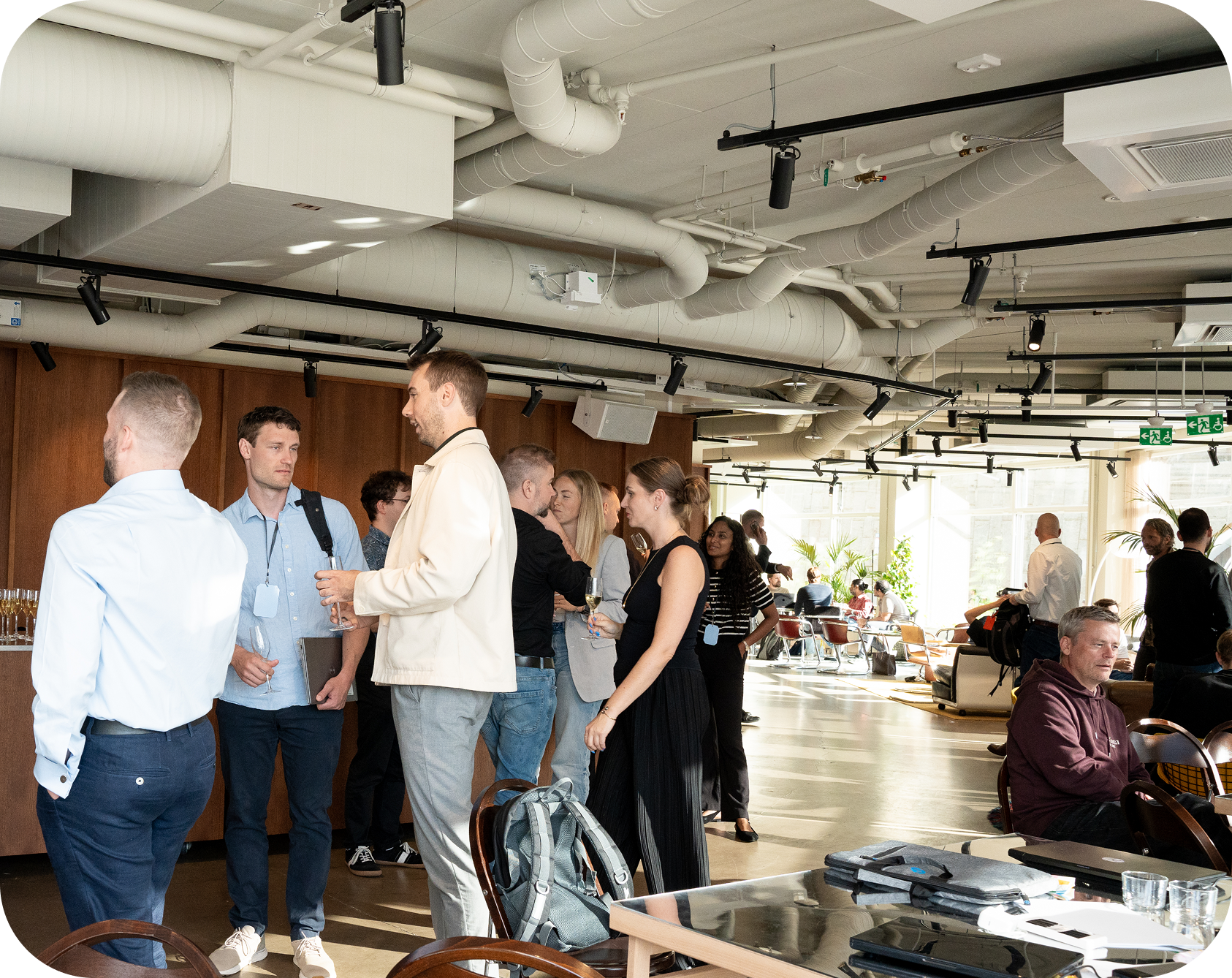
Selling fintech is hard: long sales cycles, a buying committee to convince and prospects who already have suppliers. Most deals still start with meeting in person. Instead of expensive LinkedIn ads, Alexandra Studio reaches buyers through contacts of contacts, building rooms together with companies that already sell to them. Once prospects know you, the conversation changes. They know what you do and where you stand out, a newsletter keeps you top of mind, and knowing your audience and their objections lets you show how you would solve their problem, without gimmicks or closing at any cost.
How to get a seat at the table
Fintech buyers need to meet you in person. We make that happen more often.
We know what selling fintech is like.
The sales cycles are long, there's a whole committee to convince, and most of your prospects already have a supplier they're happy with. Your market might be massive, but the biggest challenge is usually the same: how do you get those introductions? Most fintech deals still start with meeting someone in person. Our job is to make that happen more often, with the right people. Once you're in the room, you get to show why you win.
LinkedIn ads are expensive. We have a better way.
Paying to show your logo to strangers rarely works in fintech. Your buyers aren't on LinkedIn looking for a new supplier. They hear about you from people they already know. So we go through contacts of contacts. We find the companies that already sell to your buyers, build a room together with them and invite the right people. It's a more natural way to meet, and it works better.
When people already know you, it's a different story.
They know what you do
Your prospect already knows what you do, what you're great at and where you're not the right fit. That makes the first real conversation much easier.
You make 30 seconds count
You usually get about 30 seconds to explain why you're better than the others. We help you figure out what really makes you stand out, so that's what people remember.
You stay top of mind
Most buyers aren't ready the first time you meet. A newsletter keeps you in their inbox with something worth reading until the timing is right.
Know your audience.
It's a lot easier to be interesting when you know what your audience is looking for. What are they trying to solve right now? What's changing in their industry or their budget this year?
Talk about that, and people stay and read. Every room and every newsletter we make starts there.
Work in their shoes.
Objections tend to come from the same place. Write down the most common ones, then tailor your answers to each buyer's industry and the time of year they're buying in.
When a prospect pushes back, they're giving you information. They're telling you what they need to hear before they can say yes.
So show them you understand their challenge. Then show them how you'd solve it: the numbers, how much they'd save, how you'd actually do it.
And don't close at any cost. Someone who gets pushed into a deal turns into an unhappy customer down the line.
No gimmicks.
Sales gimmicks are short-term gains. Shortcuts and trying to manipulate the conversation don't work anymore. People can tell when you're trying to fool them, and buyers are getting pickier every year. What actually gets you more customers for less cost is simple: a good product and the right relationships. We help with the relationships.
FAQ
What is B2B marketing?
It's how one company gets other companies to trust it enough to buy. In fintech that usually means six to ten people who all need to agree, and most of them make up their mind based on what someone they trust says about you.
What is relationship-led growth?
It means growing through the people who influence a buying decision instead of paying for anonymous attention. In fintech that usually means figuring out who's on the buying committee, who they already trust, and giving them a good reason to meet you.
Isn't this just event marketing?
No. The event is where it starts. After that comes the follow-up, the content, the newsletter, the partner relationships and keeping track of which accounts we've reached. That's what turns one evening into new customers.
How do you measure word of mouth?
We track the moments we can see: who was invited, who signed up, who came, who engaged afterwards, and which of your target accounts moved into a real conversation.
Does this replace paid advertising?
Not always. If you need to reach millions of people, ads can make sense. If you sell a complex fintech product to a few hundred people, we'd rather know who those people are and get you in a room with them.