Theory
I work with select clients to deliever fast- High Quality Growth Results, based in Stockholm. Below are the four manuals to create this kind of traction yourself and for your team. Need more resources? Reach out to me. I currently work with two clients and I am taking on one more for Spring 2026.
About
Beyond Differentiation
Differentiation isn't enough. A good product isn't enough. Growth requires seven pieces to fall into place and most companies aren't aware of them, wondering why their branding won't stick or why clicks aren't converting.
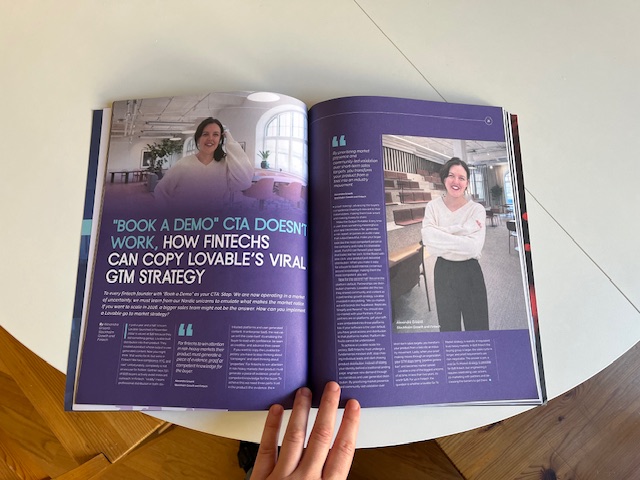
I was recently featured in Nordic Fintech Magazine on Lovable's viral go-to-market strategy. What makes that case interesting is the underlying logic. The reason it works is unintuitive but genius: distribution is harder to achieve than differentiation. We aren't selling a product. We are creating a space for the audience's voice. For their belonging.
In these four manuals I'll walk through what growth actually is, the seven pieces it takes to scale, the layered approach to acquisition, and why design is the thing that makes distribution work. Not as a checklist — as a way of thinking.
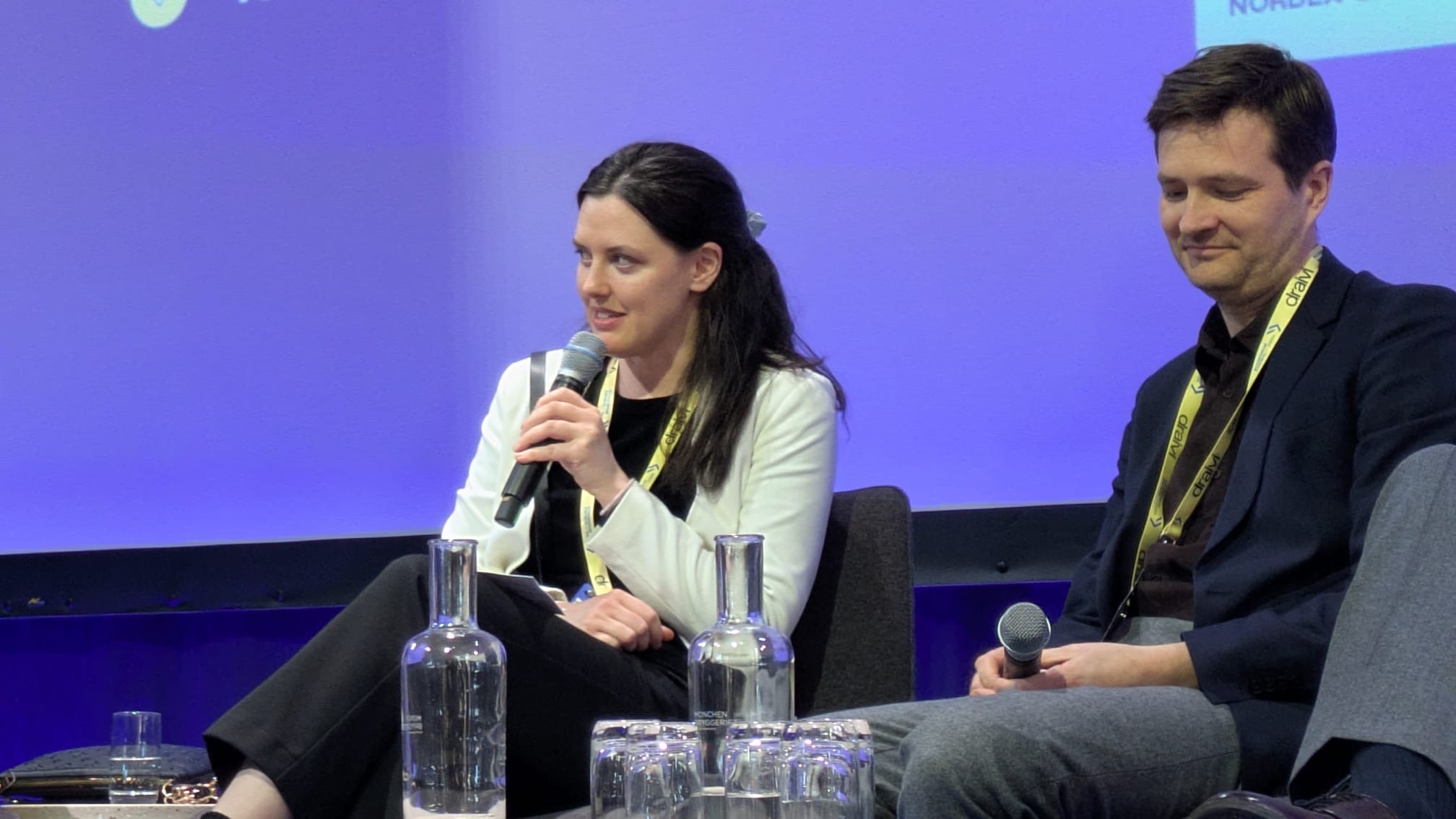
I work with clients to discover their audience's voice instead of guessing at it. Together we use their perspective and their words to reach and speak to other users like them. That's not a soft strategy. It's the most precise targeting available — because most growth strategies are built around what the company wants to say. These four manuals are about learning to get out of the way.
Scale Up
Achieve Real Growth, Not Just Clicks That Don't Convert
Most companies are losing money on ads guessing USPs and what the audience wants to hear. Different "creatives", same assumptions. We guess at the words our customers respond to. We brainstorm in rooms full of people who are not the customer. And then we wonder why our strategies don't take off.
Digital content doesn't give you the recovery time a sales conversation does. You can't read the room, pivot, save it. The audience is exhausted, overstimulated, and moving fast — and most marketing makes them feel more alone, not less.
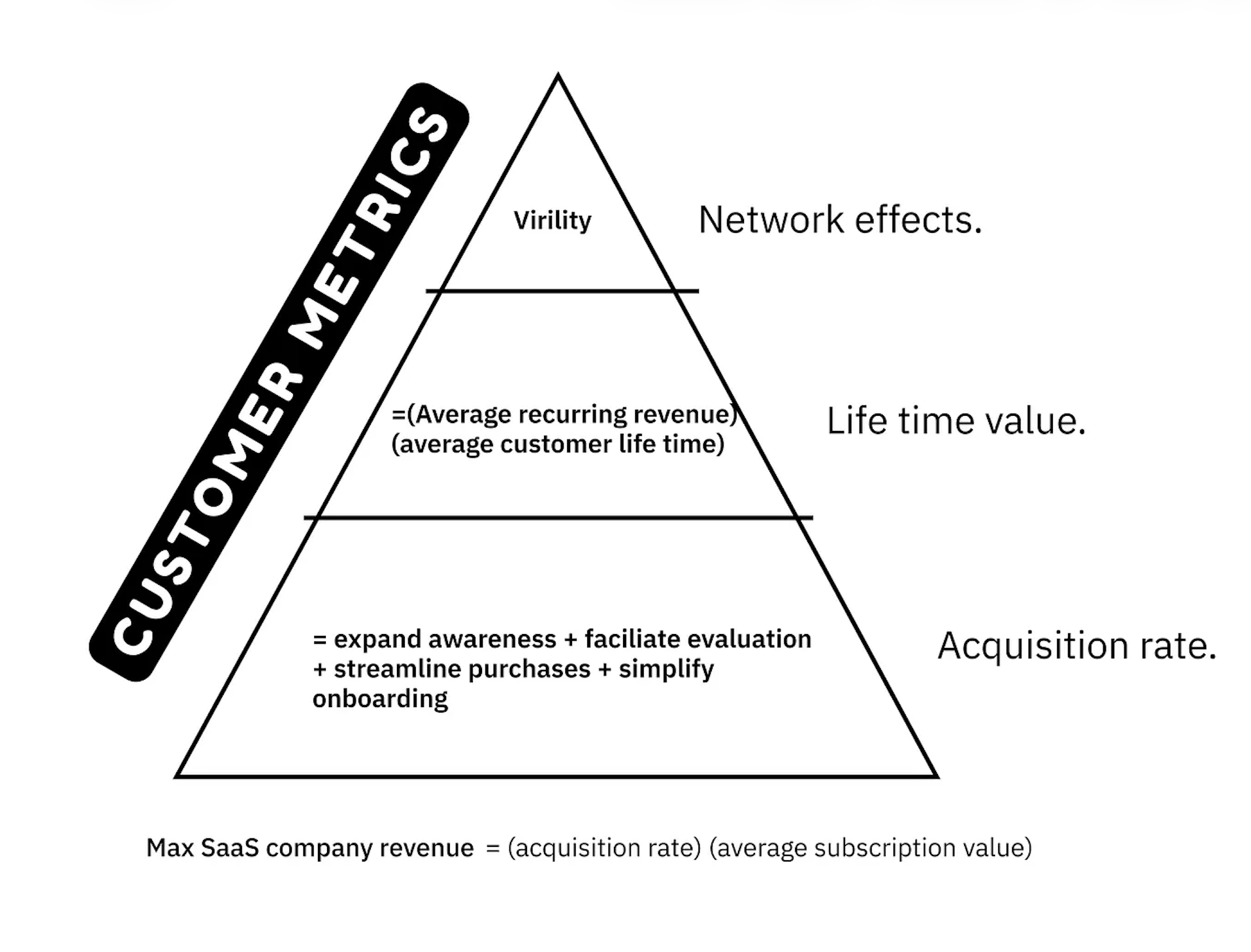
Here's what growth actually requires. All seven pieces.
01 — Acquisition
Getting someone to care enough to look. That's the easy part to name and the hard part to earn.
02 — Voice
Not your voice — theirs. Real stories, real language, the specific way your customer describes the problem you solve. Nothing performs better than that, and it cannot be generated.
03 — Conversion
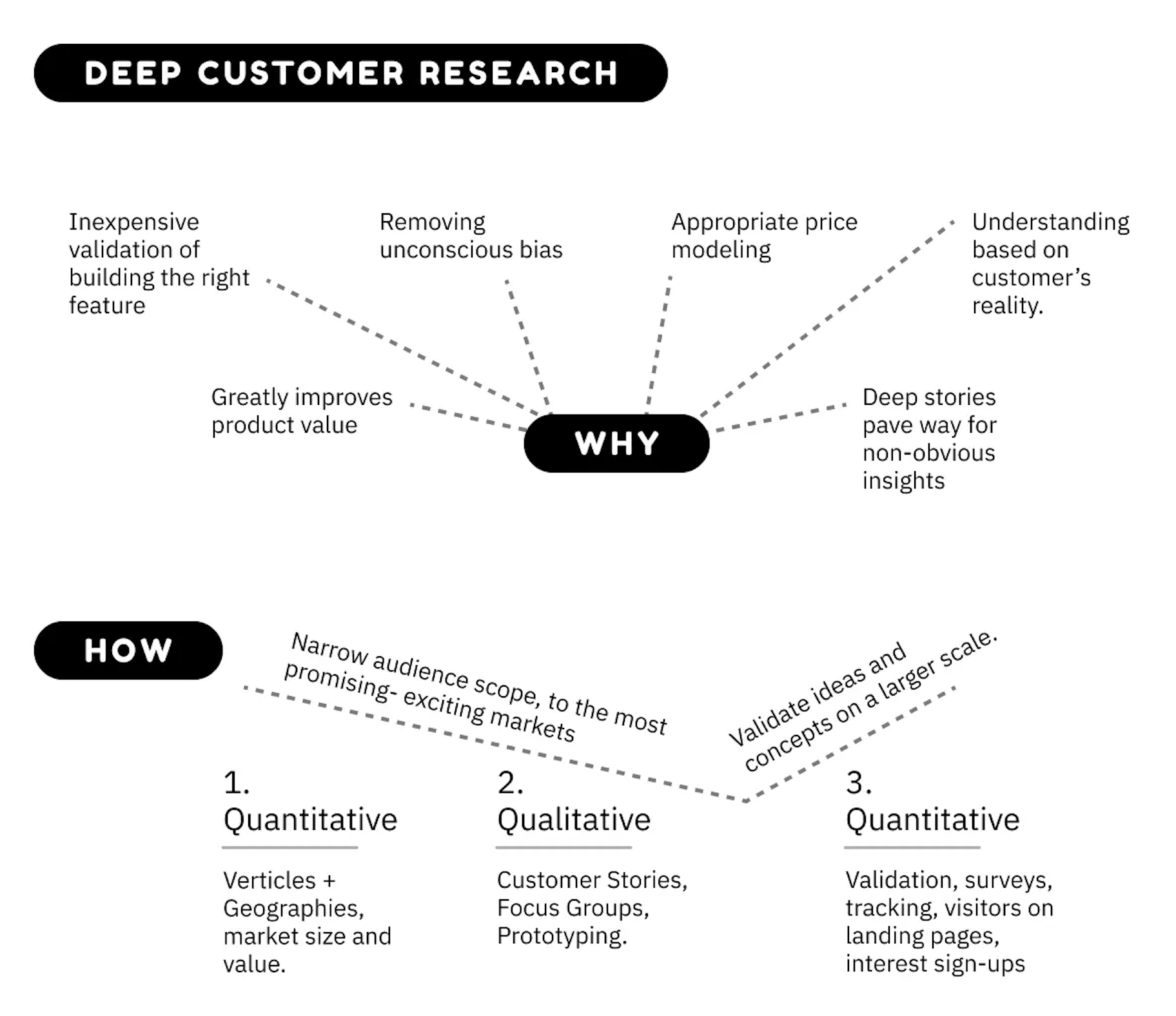
Getting someone to your page is 20% of the work. The other 80% is what happens when they arrive. Where do they leave? What do they not understand? Build it for them, not for you. Companies still aren't building their landing pages by user testing. Build the website for real potential customers, who you have tested the website on. You'll be surprised how confusing your website is when you user test it.
04 — Advocacy
A purchase happened — but that's not growth, that's a transaction. Growth happens when that customer tells someone who trusts them. What is your share strategy? What are you doing to deserve it? Pull this data into your product roadmap to achieve scalability.
05 — Retention
Churn is data. It is your customers telling you something. You must discover why this happening. Even the smallest amount of churn will be insightful.
06 — Distribution
How you scale beyond your own reach — through partners, platforms, and adjacent communities that already have the trust you're trying to build. Don't do all the awareness alone. Cross-collaborations go a long way.
07 — Community and Narrative
We are not building a product with users. We are building a space with belonging, an identity, a narrative. This is the heart of branding and has everything to do with your customer base as a whole.
Layers
The Layered Approach to Compounding Growth
Most growth strategies work in isolation. A campaign here. A partnership there. A rebrand when things plateau. The layered approach is different — it's designed so that each piece makes the next one more powerful. The compounding effect is the point.
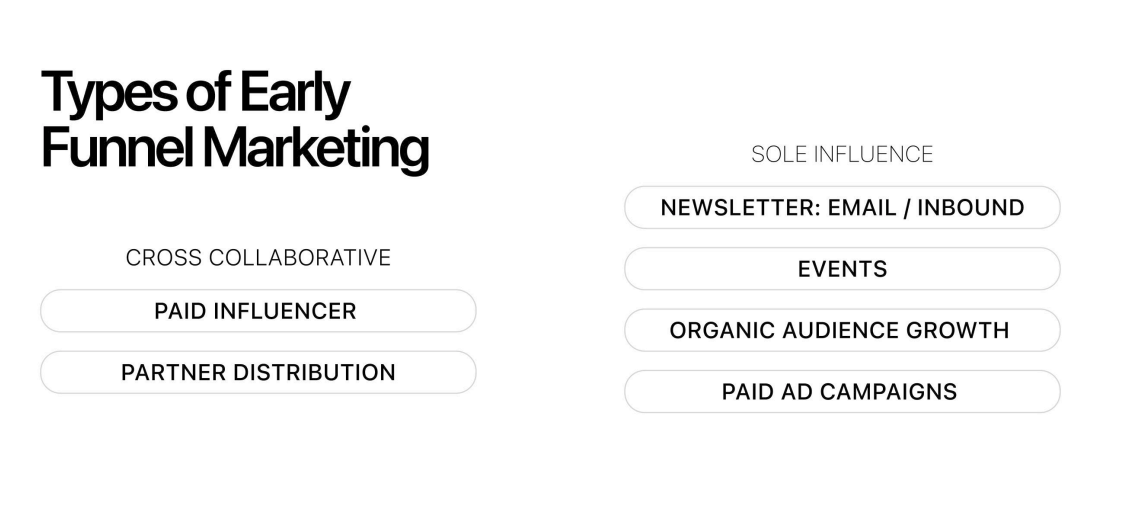
This is a six-month framework. Not because transformation takes exactly six months, but because that's the minimum runway needed to move through all the layers without skipping the ones that feel slow but matter most.
Here is how the layers build on each other.
Layer 01 — In-Person Listening
Before any campaign, any content, any positioning work — you go into the room. Events, roundtables, informal conversations with real customers. You are not presenting. You are listening. The language people use to describe their own problems is the single most valuable creative asset you will collect in six months. No survey, no focus group, no AI tool replicates it.
Outcome: A bank of authentic customer language, real pain points, and the emotional triggers that actually drive decisions.
Layer 02 — Expert Partnerships
Reach out to credible voices in your field — not for endorsements, but for genuine knowledge collaboration. Co-authored articles, shared research, joint events. This builds trust with your audience through association and gives you content with real intellectual weight behind it. The audience can tell the difference between expertise and content marketing dressed up as expertise.
Outcome: Organic authority, expanded reach into the expert's audience, and a library of credible knowledge assets.
Layer 03 — Brand Partnerships
Identify adjacent brands serving the same audience but not competing with you. A well-chosen brand partnership gets you into a distribution channel that already has trust — the thing that takes years to build alone. The goal is a genuine win-win: shared audiences, shared content, shared reach. Not a logo swap.
Outcome: Access to warm audiences, increased distribution, and brand credibility through association.
Layer 04 — Shareable Product Design
Advocacy doesn't happen by accident. The product itself needs to be designed with shareability in mind — personalised outputs, results worth showing, moments that make the customer feel seen enough to tell someone else. This is where product, UX, and growth strategy meet. If sharing your product feels natural, your customers become your distribution.
Outcome: Organic referral loops, lower acquisition costs, and a product that markets itself.
Layer 05 — Conversion Analysis
Running this analysis mid-runway, not at the end. Where are people dropping off? At which step, on which page, after which message? Drop-off is not failure — it is a precise signal about where your communication is breaking down or where expectations are being misset. This layer is what separates campaigns that iterate from campaigns that repeat the same mistake.
Outcome: A clear picture of friction points, with data to prioritise what to fix first.
Layer 06 — Campaign and Narrative
Now you have everything. Real customer language from layer one. Credible content from layer two. Expanded reach from layer three. A product people share from layer four. Conversion data from layer five. The campaign built from all of this is not a creative guess. It is a high-quality, evidence-backed narrative told in your audience's own voice — which is the only voice they fully trust.
Outcome: Campaigns with measurably higher resonance, built on real insight rather than assumption.
Layer 07 — Brand and Messaging Refinement
The final layer is where everything feeds back into the brand itself. What you've learned across six months — about language, trust, drop-off, community — becomes the basis for refining your positioning, visual identity, and core messaging. This is not a rebrand. It is a recalibration, grounded in evidence, that makes every future campaign start from a stronger place.
Outcome: A brand that reflects who your customer actually is — and speaks to more people like them.
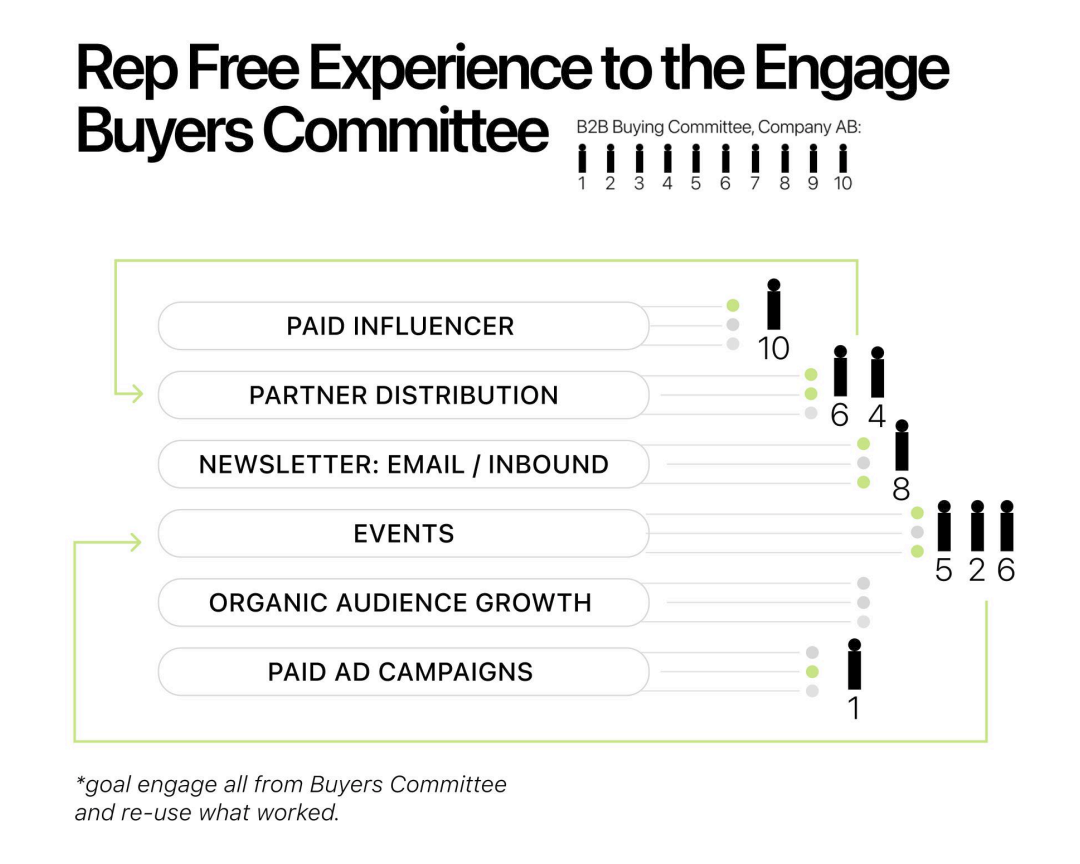
Six months done well leaves you with something most companies don't have: a growth system that knows why it's working. Not a campaign that got lucky once.
Design
Show, Don't Tell.
As humans we feel before we give something a chance. The language of the colors, photography, layout, style. The quality of light. You learn quickly in architecture that people don't experience plans. They experience what's actually there. My background is in Architecture and I approach my work as an Architect does. We communicate using mood, atmosphere and lifestyle.

You can write pages of narrative. You can define your values, articulate your mission, workshop your positioning until it's airtight. And if you don't express it visually, it is lost. Not because the words are wrong. Because no one cares to read pages of text. At first glance they have already decided if this is their tribe or not.
People respond to what they see, hear, and feel before they respond to what they're told. Emotion moves faster than argument. Mood is absorbed before meaning. This is not a weakness in your audience — it is how human perception works, and design is the discipline built for it.
Visual language is how you do this. Photography that shows the real community — not a stock image approximation of it, but the actual faces, textures, and moments that make your audience recognise themselves. Typography that carries mood before it carries meaning. Colour and atmosphere that tell someone, before they've read a word, whether this is for them.
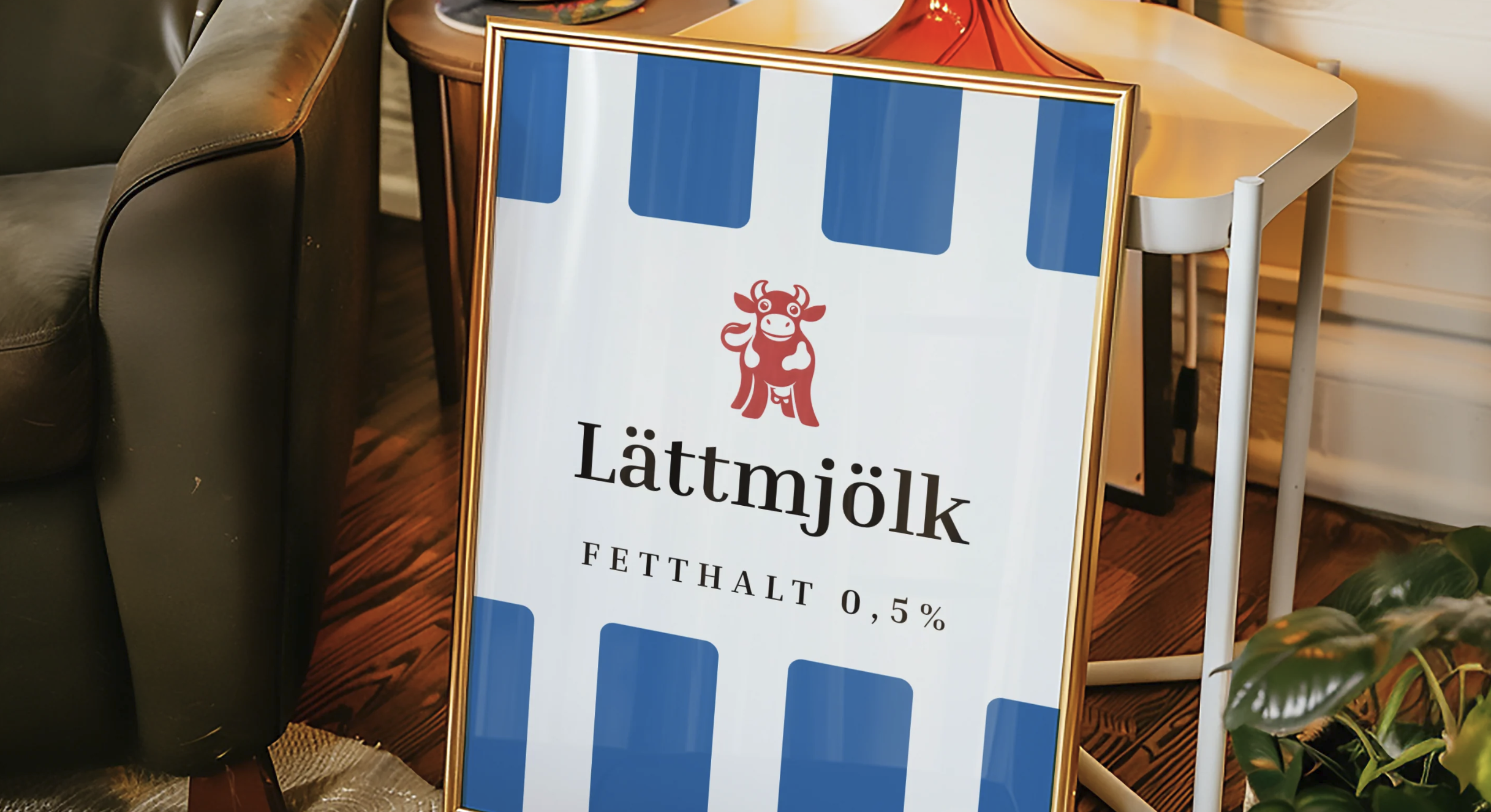
The question I ask at the start of every visual identity project is not what do you want to say. It's who is this community, what do they feel like, what do they sound like — and how do we make someone who belongs in it see themselves immediately when they encounter this brand.
Show the real thing. Always show. The moment a brand starts illustrating the idea of its community instead of its actual community, it loses the only thing design cannot manufacture: trust. To build trust you have to show- not tell real stories and real people like them.